
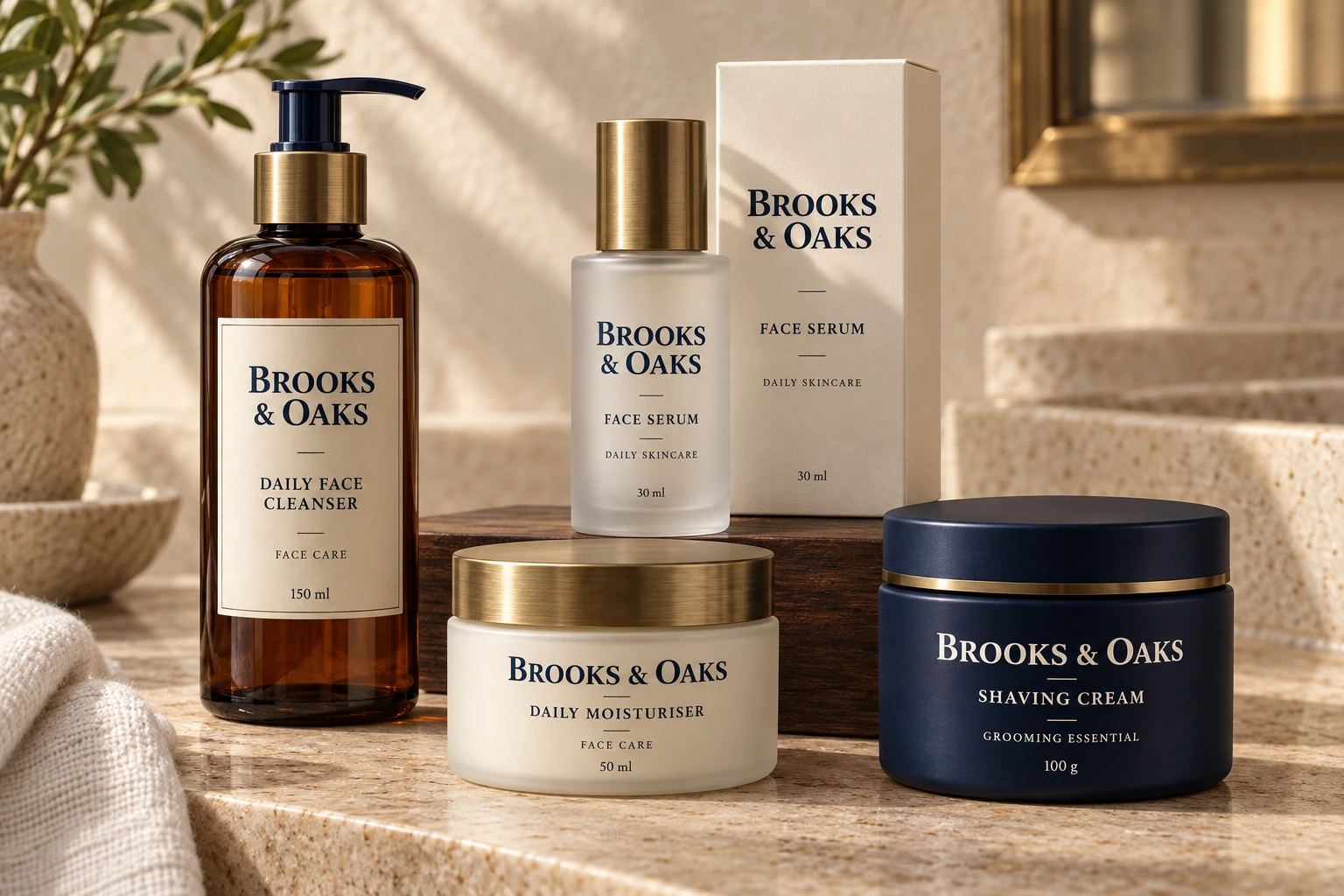
A personal-care gift sits close to someone's everyday life. It may become part of a morning routine, an occasional evening ritual or a small pleasure kept on a familiar shelf. That closeness makes the choice potentially meaningful, but it also asks for attention to the recipient's preferences.
A thoughtful gift is not defined by the number of products in the box. It is defined by how well the selection fits the person and how clearly the gesture is communicated. A single suitable product, chosen for a real reason and accompanied by a specific note, can feel more personal than a large assortment selected only for its presentation.
Begin with something you know
Think about the recipient's established habits and preferences. Do they enjoy fragrance, prefer a particular texture or travel frequently? Have they mentioned a product category they like? Useful knowledge can be modest, but it should come from the person rather than from a stereotype.
Avoid choosing a gift as a correction to someone's appearance or routine unless they have explicitly asked for that kind of help. A personal-care present should feel like an invitation to pleasure or convenience, not an unsolicited assessment of what needs improving.
If your knowledge is limited, ask a simple preference question. The surprise can remain in the final selection and presentation. A little clarity about fragrance or product type can make the gift more thoughtful, even when it reduces the element of complete secrecy.
Choose a role the recipient can recognise
A gift becomes easier to use when its purpose is clear. A body cleanser for an everyday shower, a suitable body cream or an occasional cosmetic ritual can each have a recognisable place. The role should be understandable without requiring the recipient to redesign their entire routine.
Do not assume that a versatile-sounding ingredient makes a product suitable for every use. Review the actual category and directions. A body oil and a hair oil may look similar but belong in different contexts. Clear product identity is part of the gift's usefulness.
Consider the effort involved. An elaborate routine may appeal to someone who enjoys it, while another person may prefer a dependable everyday item. Choose the experience the recipient is likely to welcome, not the one that creates the most impressive unboxing arrangement.
Treat fragrance as a personal preference
Fragrance can make a gift memorable, but it is also highly individual. Ask about preferences or pay attention to products the recipient already enjoys. A broad family such as woody or floral can be a starting point, though it does not guarantee that every scent within that family will appeal.
Known sensitivities and fragrance-free preferences should guide the choice. A product's botanical or premium description does not make it universally suitable. Look at complete ingredient information where relevant and avoid giving broad assurances you cannot support.
If uncertainty remains, choose a format that allows a suitable degree of choice or a product category less dependent on a strong fragrance preference. Confirm any sampling, exchange or gift-option availability with the retailer rather than assuming it exists.
Read the complete product information
Before ordering, confirm the exact variant, quantity, intended use and full ingredient declaration. Similar packaging can make it easy to select the wrong option. A gift deserves the same practical review as a product you would buy for yourself.
Check what is included. Atmospheric photographs may show props, multiple products or presentation elements that are not part of the listing. For a set, review the contents individually so that the recipient receives a coherent collection rather than an assortment you have not examined.
If a detail matters, ask a precise question. A retailer can clarify product information and packaging, while individual medical suitability may require qualified advice. Keep those roles distinct and avoid turning a gift enquiry into a promise that a product will suit every circumstance.
Choose quantity with care
A larger size can be useful when you know the recipient already enjoys the product. For an unfamiliar choice, a suitable smaller format may feel less demanding and provide room to explore. The best quantity depends on the role and the person's likely use.
Do not equate a heavy box with a generous gesture. Several products the recipient does not want can create more storage and decision-making work than pleasure. A smaller selection may show greater attention if each item has a clear reason to be there.
Price is part of the decision, but the recipient's experience extends beyond it. Clear information, appropriate choice and a thoughtful note can make the gift feel personal without requiring an extensive set.
Make the presentation support the product
Choose packaging that protects the contents and makes the gift easy to open. Avoid decorative additions that obscure labels or make the products difficult to identify. The recipient should be able to move naturally from presentation to ordinary use.
A restrained palette, a suitable ribbon or a well-chosen card can be enough. There is no need to fill every space with ornaments. The product and the message should remain the focus.
If sending directly, confirm the available gift options and what information will accompany the order. Do not assume that pricing, invoices or messages will be handled in a particular way unless the retailer confirms it. Practical clarity prevents an avoidable surprise.
Write a note with one specific reason
Explain why you chose the gift. A sentence about a shared memory, a preference the person mentioned or the kind of moment you hoped to offer can make the gesture feel considered. Specificity is more meaningful than a collection of grand adjectives.
Keep the note free from instructions about how the recipient should feel. You can offer a quiet evening without promising that the product will transform their mood. You can mention a fragrance association while leaving them free to experience it differently.
The note should sound like you. A simple personal sentence is often warmer than formal luxury language. The product provides the object; the note provides the relationship.
Consider the practical arrival
Plan delivery with the recipient's circumstances in mind. Review current shipping information and allow appropriate time, especially around an occasion. Do not promise an arrival date that has not been confirmed through the seller's current service.
Think about where the parcel will be received and whether someone can accept it. If the gift is a surprise, arrange the logistics without exposing unnecessary personal information. A thoughtful choice can lose some of its ease if the recipient must solve an unexpected delivery problem.
Keep the order details available in case support is needed. The goal is not to burden the gift with administration, but to make it easy to resolve an ordinary question after it arrives.
Leave room for the recipient's own experience
Once the gift is given, allow the person to use it at their own pace. Do not require an immediate review or ask repeatedly whether they have opened every item. A gift should not create a performance of appreciation.
Their experience may differ from yours. A fragrance you love may become an occasional choice for them, or a product you expected to be special may become a practical everyday favourite. Both are valid ways for the gift to find a place.
If an exchange or another arrangement is needed, approach it graciously within the current retailer policies. The thought behind the gift can remain intact even when the specific product is not the final choice.
Three gift briefs with different answers
Imagine choosing for three recipients. The first is a close friend who has mentioned enjoying woody body-care fragrances. The second is a colleague whose preferences are largely unknown. The third is a frequent traveller who has explicitly asked for help simplifying a personal-care kit. The same attractive product set is unlikely to be the most thoughtful answer to all three briefs.
For the friend, the known preference provides a useful starting point. You can review suitable products within that general atmosphere, while still checking the exact variant, full information and intended use. A note can mention the conversation you remembered without claiming that every woody scent will feel the same to them.
For the colleague, restraint may be more appropriate. Avoid making assumptions about fragrance, skin or grooming needs. A format that offers choice, where available and suitable, may be more considerate than a highly specific product selected mainly from your own taste. Confirm current gift options rather than assuming a particular retailer provides them.
For the traveller, practical relevance leads the choice. Ask about the routine and the kinds of journeys involved. Container requirements and transport rules need current official verification for actual travel, so do not promise that a product is universally travel-compliant. A useful kit should be clear in identity and manageable in the person's real setting.
Presentation can remain consistent across the three gifts without making the contents identical. A restrained package and a legible note support the gesture. The note changes because the reason for choosing changes. One recalls a preference, another expresses thanks and the third acknowledges a practical request.
Before ordering, review quantity and what is included. A larger set may feel generous but contain several items with no clear role. A smaller suitable choice can be more personal when it reflects what you know rather than how much space you wanted the box to fill.
After giving, allow each recipient to respond differently. One may use the product immediately, another may keep it for later and the traveller may adapt the kit. The gift is an offering, not a test of whether they follow your imagined routine.
These contrasting briefs show why thoughtfulness begins before the product search. The relationship, the known preference and the intended role shape the decision. A premium gift earns its meaning through that attention, with packaging and price supporting the choice rather than standing in for it.
If buying more than one gift, keep a separate brief for each recipient. Similar occasions do not create identical preferences. A short note naming the person, the known preference and the intended product role can prevent a convenient bulk choice from replacing the attention that made the gesture thoughtful.
Let thoughtfulness define luxury
A luxury gift can be understood as an act of attention: you noticed a preference, chose a clear role, checked the practical details and wrote something personal. The presentation supports those decisions rather than replacing them.
Before ordering, ask whether the selection feels connected to the recipient or mainly to the image of the gift you want to give. That question can lead to a smaller, clearer and more meaningful choice.
Personal care becomes a thoughtful present when it offers pleasure without pressure. The best gift leaves the recipient with something suitable to explore and the sense that the person choosing it had them in mind.
