
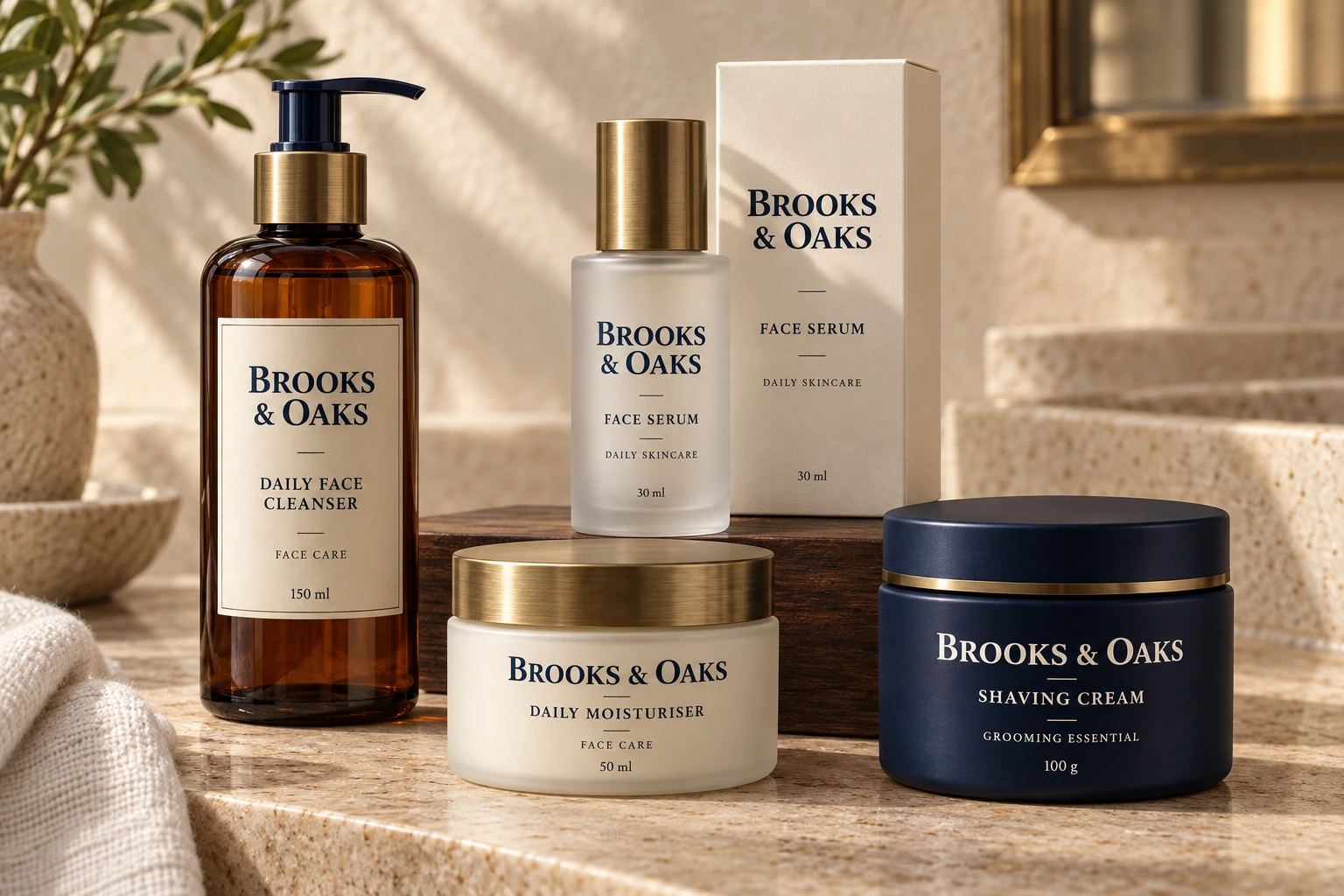
A gift set can feel like a considered story or a collection of unrelated objects placed in the same box. The difference is usually purpose. When each item has a role within a simple experience, the recipient can understand the gift without needing to invent a routine for it.
A ritual set might be built around an everyday shower, a quiet evening or a travel-ready version of familiar care. It does not need many products. A small set with clear information and a personal note can offer more pleasure than a larger assortment whose contents compete for attention.
Choose the moment first
Name the moment you want the gift to support. Keep it specific and realistic: a familiar morning routine, an occasional body-care evening or a compact set for someone who travels often. The moment becomes a filter for every item you consider.
Avoid choosing a theme so broad that anything can be added. “Luxury” alone does not explain why a cleanser, a notebook and several unrelated accessories belong together. A clearer moment helps you decide what is useful and what is merely decorative.
Consider the recipient's actual habits. A lengthy ritual may suit someone who enjoys personal-care routines, while another person may welcome a simple everyday pair. The set should meet the person where they are rather than ask them to adopt your preferred version of self-care.
Select an anchor product
Choose one product that carries the main purpose of the set. It could be a suitable cleanser or a body product the recipient is likely to enjoy. Review its exact category, variant, quantity and directions before adding supporting items.
The anchor should be understandable on its own. If the rest of the set disappeared, the recipient would still know what it is and how it fits a routine. This gives the gift a clear centre and prevents the presentation from doing all the explanatory work.
Do not choose the anchor solely because it has the most dramatic packaging. The visual appeal matters, but the product needs a useful role. A familiar, well-chosen item can provide a stronger foundation than an unusual formula selected only for surprise.
Add a complementary role
A second item should contribute something distinct. In a body-care set, a cleanser and an appropriate leave-on product may have separate roles, provided the recipient's preferences and product directions support the pairing. Two near-identical products may be alternatives rather than a coherent sequence.
Read each item's instructions individually. Shared branding or fragrance does not make products interchangeable, and a set should not imply uses beyond those stated by the manufacturer. Clear roles help the recipient use the collection appropriately.
Ask whether the second item makes the first more enjoyable or simply makes the box fuller. If its purpose is difficult to explain, leave it out. A set can feel complete with fewer pieces when the relationship between them is clear.
Keep accessories practical
An accessory can add tactile pleasure or convenience, but it should fit the routine. A suitable towel, a useful pouch or another clearly relevant item may support the theme. Choose it for material, care requirements and actual use as well as appearance.
Avoid adding objects that create maintenance work the recipient did not ask for. A delicate decorative tray may be less useful than a simple practical item if the gift is intended for a busy shared bathroom. The accessory should make the routine easier to enjoy.
Check what the retailer's set already includes before assembling your own additions. Product photographs may show styling props that are not supplied. A clear list of contents prevents the final gift from differing from what you imagined.
Make fragrance coherent without assuming preference
A shared fragrance mood can connect a set, but the recipient's preferences come first. Similar descriptions do not guarantee that every combination will appeal, and a strongly scented assortment may be unsuitable for someone who prefers fragrance-free care.
If you know the person enjoys a particular fragrance family, use that information as a starting point. Consider the whole routine rather than adding several prominent scents. One lead aromatic element may be enough.
Do not use botanical or premium language as a substitute for checking relevant ingredients and suitability. A gift should not come with broad guarantees that every product will agree with the recipient. Clear information and thoughtful choice are more useful.
Write a simple sequence card
A short card can explain the intended theme and identify each item's role. Keep it consistent with the actual product directions. The card should not invent application amounts, contact times or medical benefits that are not supplied by the manufacturer.
You might describe the set in ordinary terms: a cleanser for washing as directed, a body product for its labelled use and a suitable accessory to make the routine comfortable. The wording can be warm without becoming a technical manual.
Include the reason you chose the moment. A sentence about an unhurried evening or a familiar travel habit makes the set personal. Let the recipient decide how and when to enjoy it rather than turning the card into an obligation to complete every step.
Keep packaging easy to open and reuse appropriately
Protect the products and arrange them so the contents are visible and stable. Avoid so many layers of decoration that opening becomes awkward. The recipient should be able to identify the products and find the message without dismantling an elaborate construction.
If a container is intended for later use, choose one whose practical role is clear. A pouch that fits the products or a suitable box for dry storage may be useful. Do not make broad environmental claims about packaging simply because it looks reusable; actual use and materials matter.
A restrained visual palette can give the set coherence. Let colour, spacing and a small finishing detail do the work rather than filling every gap. The gift should feel complete, not crowded.
Check the details before sending
Confirm the exact contents, quantities and variants. If ordering items separately, make sure they will arrive in time and that the final arrangement matches the intended gift. Review current delivery information rather than assuming a previous service or time frame still applies.
Check the available gift-message and invoice arrangements if the order will go directly to the recipient. Do not assume pricing information is hidden or a note is included unless the retailer confirms it. These small details shape the arrival experience.
Keep support and order information available for yourself. If a question arises, you can help without asking the recipient to navigate the entire purchase history. Practical preparedness supports the generosity of the gesture.
Leave room for individual use
The recipient may not use the set exactly as you imagined. They might keep one item for travel, use another every day or save the optional accessory for a different routine. That flexibility is part of a well-chosen gift.
Avoid requiring the person to report on every product. The set should offer possibilities rather than create a sequence they must perform to demonstrate appreciation. A thoughtful theme can remain meaningful even when the routine changes in their hands.
If one item is unsuitable, respond graciously and explore any available options within the current retailer policies. The purpose of the gift is the recipient's enjoyment, not preserving the original arrangement at all costs.
Curate one evening set from the inside out
Imagine building a small gift around an unhurried evening wash and body-care routine. Begin with the recipient's preferences, including fragrance and any relevant ingredients they avoid. If that information is uncertain, clarify it before selecting an elaborate combination. The theme should serve the person rather than override what you do not know.
Choose the anchor product first. A suitable cleanser has a clear washing role and can be understood independently of the rest of the set. Review its exact variant, quantity and current directions. The gift should not depend on a poetic description to explain what the bottle actually is.
Next, consider whether an appropriate leave-on body product adds a distinct role the recipient would welcome. If it does, review it on its own merits. Shared branding or a matching fragrance does not automatically establish suitability. If the second product merely duplicates something the recipient already uses and prefers, the set may be stronger without it.
An accessory is considered last. A suitable textile or useful pouch may support the routine, but only if its material, size and care requirements make sense. A decorative item that requires special maintenance or occupies scarce bathroom space can create more work than pleasure. The accessory should earn its place through use.
Now arrange the contents. Leave labels and identifying information accessible, protect the products and avoid excessive layers that make opening difficult. A limited palette and a small finishing detail can create coherence without requiring every gap to be filled.
The sequence card stays modest and accurate. It identifies the roles and directs the recipient to each product's own instructions, rather than inventing amounts or timing. A separate personal sentence explains why you thought the evening theme would appeal to them. The practical guide and the relational note can sit together without becoming a sales pitch.
Before sending, confirm exactly what the retailer or assembler will include. Gift messages, boxes and invoice arrangements should be checked rather than assumed. The arrival experience is part of the set's design, especially when you will not be there to explain it in person.
Finally, remove anything that does not support the story. The result may contain only two products and a card. That can be complete. The coherence comes from a clear invitation to a moment, with each item understood and the recipient free to decide how the set enters their own routine.
Lay the finished set out once and explain every item in order. If the explanation becomes complicated, simplify the contents or clarify the card. The recipient should be able to recognise the invitation without needing the giver present as a guide. A coherent set supports discovery while keeping the practical role of each product easy to understand.
Finish with one clear story
Before closing the box, explain the gift to yourself in a sentence. “A small set for an unhurried evening wash and body-care routine.” “A familiar core for a frequent traveller.” If the sentence is clear, the contents are likely to feel more coherent.
Remove anything that does not support that story. The final set may become smaller, but it can also become more thoughtful. Each piece has a reason to be there, and the recipient can recognise the relationship without guesswork.
A ritual gift set is an invitation to a moment. The products, accessories and note work best when they make that moment easy to imagine and comfortable to make one's own.
