
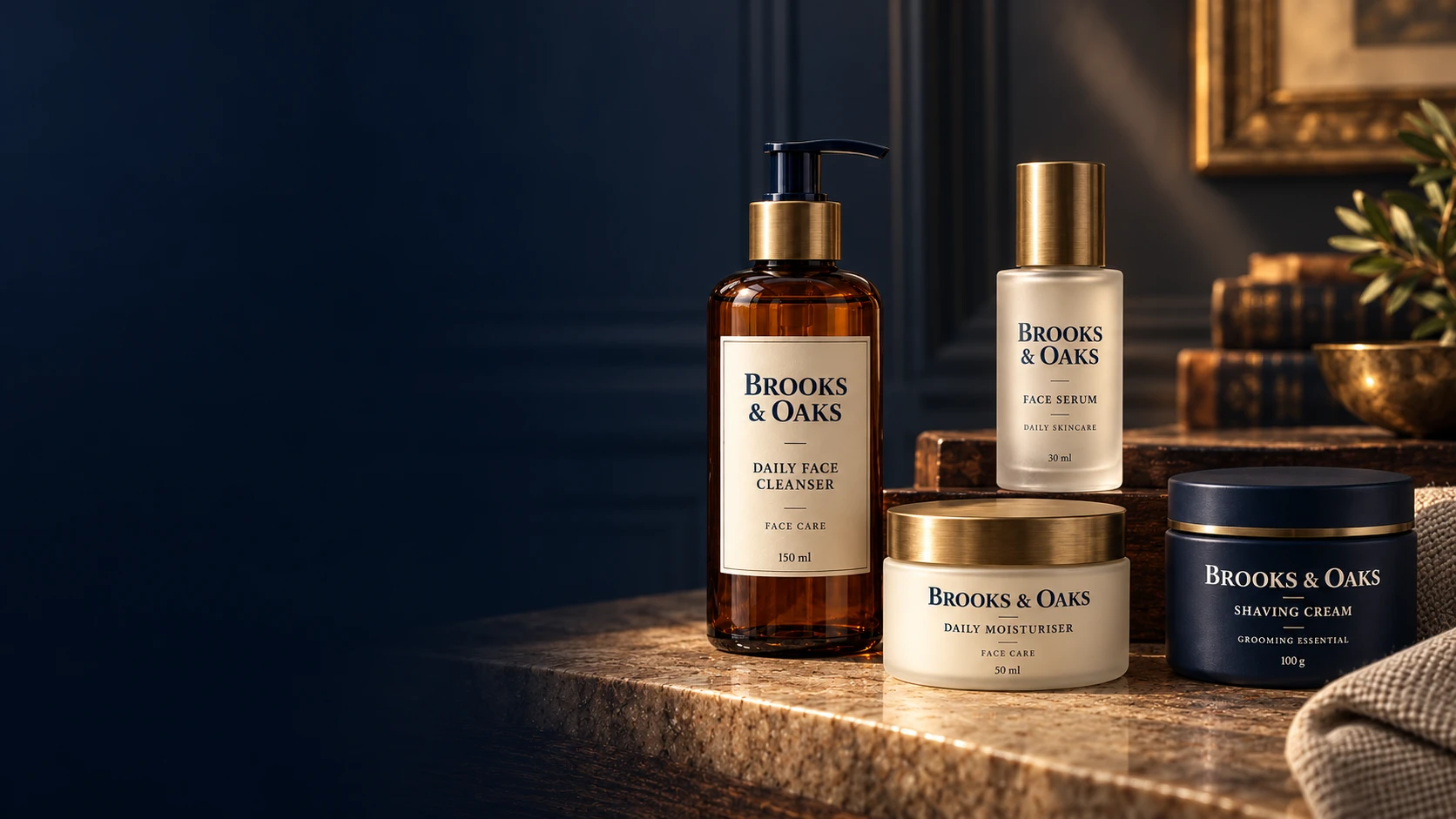
A product name can open a door in the imagination. Fresh suggests air and movement. Calm suggests space and a quieter pace. Smoked suggests depth, shadow and a more atmospheric character. These words can help you explore a collection, but they should not become instructions about how you must feel.
Within the Brooks & Oaks world, names such as Fresh Oaks, Calm and Smoked Woods offer different entry points into everyday care. This guide considers those moods as a vocabulary for choosing a cleanser. It does not assume that a name guarantees a particular ingredient, emotional result or experience for every person.
Start with the day ahead
Think about the setting in which the cleanser will be used. A morning before work, a shower after activity and an unhurried evening can each suggest a different mood. You may want one dependable fragrance for all three, or enjoy having a carefully chosen alternative.
Ask what you want from the sensory part of the routine. A brisk impression? A quieter background? A more distinctive woody character? The answer should reflect your preference, not a rule that certain scents belong to certain personalities.
Your schedule also matters. A choice that is enjoyable in a long routine should still be practical in the product's intended use. The cleanser must be used and rinsed according to its directions, whatever atmosphere its name invites you to imagine.
Fresh as an impression of openness
Fresh can suggest a clear beginning: an open window, a crisp shirt or the feeling of a room prepared for the day. In fragrance language, it is a broad impression rather than a precise formula. Two products described as fresh may feel very different.
If this mood appeals to you, identify what part you enjoy. It may be brightness, restraint or a sense of air around the fragrance. Those details are more useful than the family word alone. They help you recognise whether a particular cleanser matches the image you had in mind.
A fresh preference does not require an elaborate morning ritual. It may fit a straightforward sequence with a clean towel, a familiar product and time to dress. The atmosphere comes partly from the arrangement around the bottle.
Calm as an invitation to slow the pace
Calm can be understood as a design mood: less visual clutter, a measured sequence and a scent you experience as comfortable. It should not be read as a promise to treat anxiety, insomnia or another condition. A product name and a medical claim are different things.
If you enjoy a quieter routine, consider the whole environment. Put the phone aside, prepare the towel and choose the product before turning on the water. These practical decisions may contribute more to an unhurried experience than adding several extra products.
Your response to the fragrance remains personal. Something described as calm may not feel quiet to every wearer. Use the actual product information and your own appropriate experience to decide whether the mood suits you, rather than trying to match a description you do not share.
Smoked as a more atmospheric shade
Smoked language may evoke a distant fire, dark timber or an evening room. For some people, that suggestion adds character and interest. Others may prefer a lighter or less pronounced impression. Neither response is more sophisticated than the other.
Consider whether you want the smoky idea to be central or only a small part of the experience. A name alone cannot tell you the exact balance. Read the current fragrance description and, where possible, assess the product in its intended use rather than assuming it resembles another smoky scent you know.
The word is a sensory cue, not proof of literal smoke or a particular material in the formula. The ingredient declaration answers composition questions. Keeping the story and the factual information distinct lets both do their jobs clearly.
Compare moods without creating a competition
Instead of asking which cleanser is best in the abstract, ask which one suits a particular moment. You may choose a fresh impression for a busy morning and a more atmospheric one for an evening. You may also discover that one fragrance feels right across the week.
A comparison becomes more useful when you define a few criteria: the scent character you enjoy, the prominence you prefer, the ease of rinsing and the finish afterward. The fragrance is one part of the complete product experience, not the only part.
Avoid buying several variants simply because the names sound like a complete set. A collection is meaningful when each item has a role. If one dependable choice meets your needs, there is no requirement to create a fragrance rotation.
Read the current product page carefully
Similar packaging can make it easy to overlook the exact variant. Confirm the name, quantity, intended use, complete ingredient information and directions before ordering. If a detail is essential to your decision, ask for clarification rather than relying on an older image or a remembered description.
A fragrance story should help you imagine the product, while practical information should help you use it. A good purchase needs both. If the page offers only atmosphere, seek the missing details. If it offers only technical information, your personal fragrance preference still deserves consideration.
For known allergies or professional advice about ingredients, the full declaration takes priority over the mood of the name. Fresh, calm and smoked are not suitability categories. They cannot replace individual information relevant to your choice.
Think about the next scented step
After cleansing, you may use a body cream, oil, deodorant, hair product or perfume. Consider how the whole routine will feel. The cleanser's fragrance may be part of the immediate atmosphere even if another product becomes the more noticeable scent later.
You do not need exact matching across every bottle. A coherent routine can come from allowing one element to lead and keeping the rest less assertive. Try combinations simply and observe them rather than relying entirely on imagined pairings from separate descriptions.
If fragrance is not appropriate for you, choose accordingly. A considered ritual can be built through texture, useful packaging and an orderly setting. The premium experience should accommodate personal preferences rather than insist that scent is essential.
Give each mood an ordinary setting
If you are exploring variants, try them on normal days when you can notice the experience without rushing. Keep other parts of the routine familiar where possible. This helps you understand whether the difference you enjoy comes from the cleanser or from an entirely different setting.
Write a short note after the full routine: the fragrance impression, how it rinsed and whether the finish felt comfortable when dressing. Use your own words. “Bright but more prominent than I expected” is useful; “exactly what a premium cleanser should be” is less specific.
The note can also reveal that your first idea was incomplete. A fragrance you expected to reserve for evenings may become an everyday favourite. The point of exploring is to learn, not to prove that the label's suggested mood was the only possible interpretation.
Make the shelf easy to navigate
If you keep more than one variant, organise them clearly. In a shared bathroom, make sure people can identify the product they intend to use. Similar bottle shapes should not turn a personal choice into guesswork with wet hands.
Keep the daily option most accessible and store alternatives appropriately. Follow the label's storage guidance and avoid placing bottles in direct sunlight for display. A handsome shelf should still be easy to clean and practical to use.
The arrangement can express the collection without overcrowding it. A little space around the bottles makes the variants easier to distinguish and gives each one a deliberate place. Clarity is part of the visual pleasure.
Choose a mood for a specific morning
Imagine three ordinary situations. In the first, you are preparing for a busy day in close shared spaces. In the second, you have a quiet evening at home. In the third, you are choosing a cleanser to keep in a bathroom shared by several people. The product names may be the same in all three situations, but the useful priorities differ.
For the busy day, you might begin with fragrance discretion and a dependable washing experience. A name that suggests freshness could attract your attention, but you would still review the actual scent description and complete product details. The final choice should fit the setting, not only the mood suggested by the word.
For the evening, you may be more interested in an atmospheric impression and an unhurried routine. A softer or smokier idea might appeal, provided you enjoy the actual product and everyone sharing the space is comfortable. The label's directions remain unchanged by the amount of leisure available.
For the shared bathroom, the conversation starts with the people. Ask what they enjoy and whether fragrance-free preferences or other needs affect the selection. One common everyday product plus a clearly separate personal alternative may be more practical than asking a single distinctive fragrance to suit everyone.
These examples show why a mood-based collection works best when it invites choice rather than assigning identities. Fresh is not reserved for one kind of person, calm is not a medical promise, and smoked does not require a dramatic lifestyle. They are ways to begin a sensory conversation.
Before ordering, write a short brief naming the setting, the fragrance prominence you prefer and the practical product role. Confirm the exact variant and quantity. If an essential ingredient or direction is unclear, ask for it. The brief helps the product story meet the actual routine.
After appropriate use, compare your experience with the brief. You may find that the chosen mood fits exactly, or that another role makes more sense. That is useful learning. The aim is a cleanser you understand and enjoy, not a requirement to experience a name according to a fixed script.
A household shortlist can include one shared daily choice and a separate personal alternative. The distinction should be visible on the shelf so that a fragrance preference remains a choice rather than an accidental selection.
Let your preference remain flexible
A fragrance mood is not a permanent identity. You may enjoy fresh impressions during one period and become curious about softer or smokier shades later. Changes in schedule, setting or personal taste can all influence the choice.
Keep the core question simple: which product do you understand, enjoy and want to use in this routine? The answer may be one variant, a small rotation or a decision to explore something else. Personal care should leave room for that judgement.
Fresh, calm and smoked are useful invitations because they offer contrast. Your experience gives the contrast meaning. Choose the mood that belongs to your day, then let the ordinary ritual make it familiar.
