
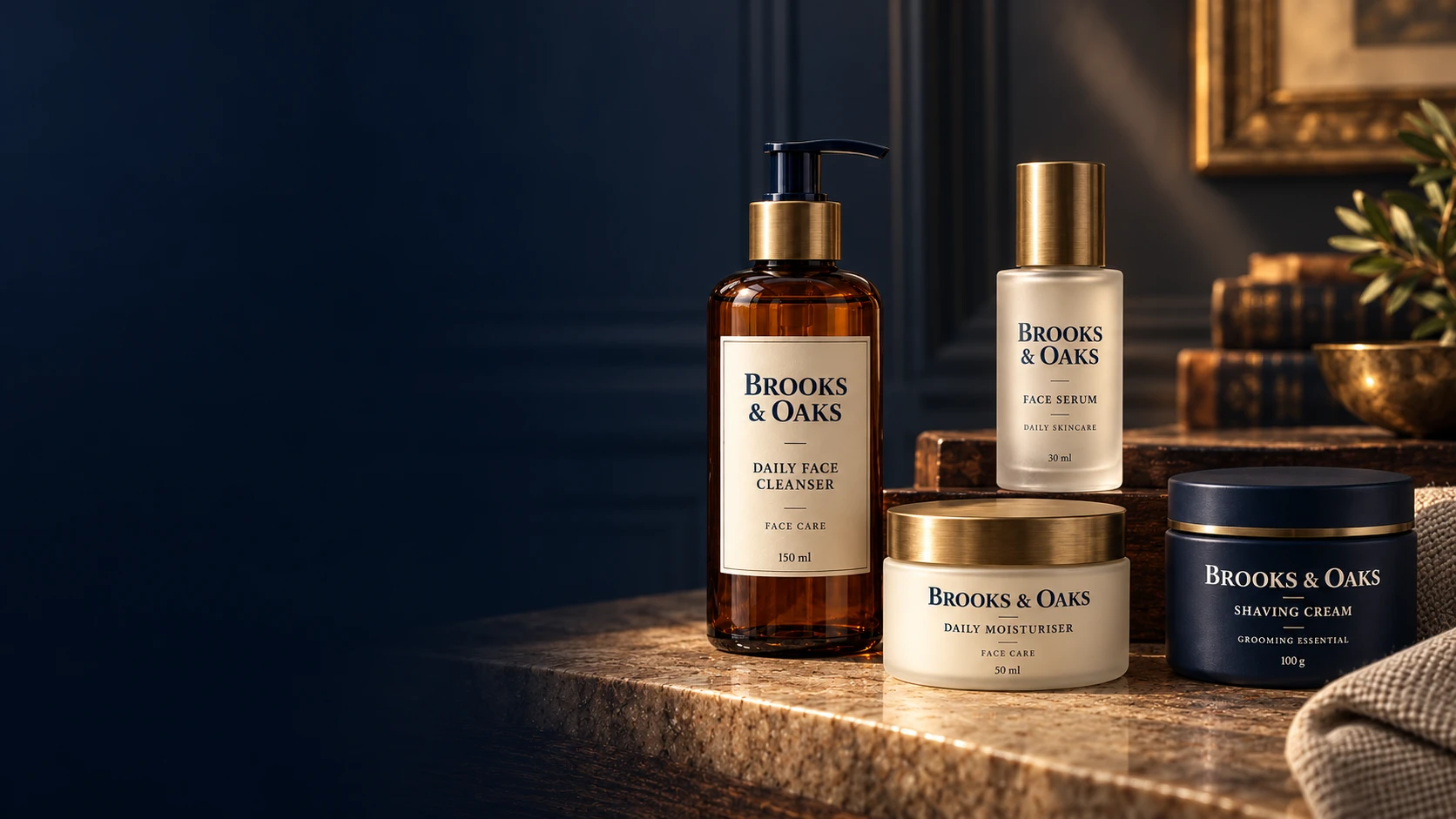
Fragrance layering is often presented as a formula for creating something more elaborate. In daily life, layering may already be happening before you consciously choose it. A cleanser, hair product, deodorant, moisturiser, perfume and freshly washed clothing can all contribute to the scent around you.
The useful question is therefore not always what to add. It may be what is already present, which element you enjoy most and how to give that element enough space. Restraint can make a combination easier to understand and more comfortable to wear, while still leaving room for personal experimentation.
Take an inventory of the existing scent
Begin with the products you use on an ordinary day. Identify which are fragranced and which have a noticeable aroma in use. Include laundry and hair care, not only products sold as fragrance. The combined environment may be more complex than the number of perfume bottles suggests.
Do not try to rank everything immediately. Simply notice what is present and when you become aware of it. A cleanser may shape the shower atmosphere, while a leave-on body product or perfume may become more noticeable later. Different roles can coexist without competing at the same moment.
This inventory often reveals an easy adjustment. You may decide that one strongly scented step is enough, or that a quieter supporting product gives your favourite fragrance more clarity. The first useful layer can be the removal of an unnecessary one.
Choose a lead element
Select the fragrance you most want to notice. It might be a perfume, a body cream or the sensory experience of a particular cleanser. The lead element does not need to be the most expensive item. It is simply the one around which you want to organise the routine.
Describe its character in ordinary words. Fresh and airy, softly floral, dry and woody, warm and smoky: the vocabulary can be personal. A clear description helps you recognise whether another scented product supports the impression or changes it in a way you do not enjoy.
Keep the lead connected to the product's intended use. Do not leave a cleanser on, apply a body product to an unintended area or increase an application beyond directions merely to make its fragrance dominant. The aromatic goal should sit within appropriate product use.
Use supporting scents sparingly
A supporting scent can add an interesting shade, but it should have a reason to be there. Ask what it contributes to the overall impression. Does it make the combination feel softer, brighter or more familiar? If you cannot identify a contribution you enjoy, it may not need a place in the sequence.
Avoid assuming that matching words guarantee harmony. Two products described as woody can have very different characters. A floral and a woody impression may feel comfortable together for one person and crowded for another. Experience the combination rather than treating the description as a mathematical rule.
There is also no obligation to create contrast. A simple, coherent scent environment can be very satisfying. Personal fragrance is not a competition to produce the most unusual combination from the largest number of bottles.
Keep product categories separate
Layering means using appropriate products in their intended ways, not mixing finished formulas inside one container. Do not pour perfume into a cream or add concentrated essential oils to a retail body oil. Those changes create a different mixture from the product originally supplied.
Each product should retain its own directions and identity. This makes the routine easier to understand and keeps useful ingredient and batch information connected to the right item. If you want a new fragrance blend, choose a product designed for that purpose.
The distinction is especially important when botanical names appear across categories. A concentrated aromatic ingredient and a finished scented cosmetic are not interchangeable. Familiar language should not blur differences in formulation or intended use.
Make one change at a time
If you want to explore a combination, keep the rest of the routine familiar. Introduce one supporting scent and observe the complete experience. Changing several products at once makes it difficult to know which pairing you enjoyed or which element became too prominent.
Choose an ordinary day with room to assess the result. Avoid making an unfamiliar combination immediately before a long journey, a crowded event or an important meeting. A low-pressure setting provides better information and makes it easier to return to a simpler routine if you prefer.
Take a brief note if helpful. Record the products, the intended use and a few words about the impression. You do not need a detailed formula. A sentence such as “The body cream competed with the perfume more than expected” can guide the next decision.
Consider prominence as well as character
Two scents can feel compatible in character but too prominent together. Separate those questions. Do you enjoy the combination itself, and is its overall presence appropriate for the setting? A pleasing idea may still need a simpler application or a different occasion.
Be aware that familiarity can change what you notice about your own fragrance. Someone nearby may experience the scent differently. Do not keep adding product solely because you no longer notice it as strongly. Follow directions and let the context guide restraint.
This is particularly relevant in close shared spaces. Transport, offices, dining tables and meeting rooms leave less distance between people. A considered fragrance routine includes their comfort as part of the setting, not as an afterthought.
Allow time to observe the whole routine
The impression during application may differ from the one you notice later. A shower product, a leave-on cream and perfume occupy different moments. Assess the combination after completing the routine rather than deciding only while every product is freshly applied.
You may discover that a pairing feels pleasant at first but becomes more crowded than you want, or that a supporting scent is barely noticeable in ordinary use. Either observation is useful. It tells you about the specific products and circumstances, not a universal law of fragrance families.
Avoid turning a personal experiment into a promise about longevity or how everyone else will perceive the scent. The goal is a comfortable routine you enjoy wearing. That is a sufficient reason to explore, without claiming a guaranteed outcome.
Respect fragrance-free preferences
Some people prefer or need fragrance-free care. Their routine should not be treated as incomplete because it does not participate in layering. Texture, grooming, clean clothing and an orderly environment can provide a fully considered personal-care experience.
If you share a space or are preparing a gift, ask about preferences rather than assuming that a subtle fragrance will be acceptable. Subtle is a personal judgement, and a product's premium positioning does not override an individual's needs.
For known sensitivities or professional advice about ingredients, use the complete product information. Words such as natural, botanical or clean do not resolve individual suitability. A thoughtful routine begins with the person, not with a fragrance concept that must be imposed.
Create a simple pairing record
A useful record can have four entries: lead product, supporting product, setting and impression. For example, you might note a favourite woody perfume, a quietly scented body product, an evening at home and a preference for using only one of them next time. The record is descriptive rather than prescriptive.
Over several experiences, patterns may emerge. You may prefer matching moods, gentle contrasts or a single scented product. Recognising that pattern can simplify future purchases and reduce the chance of buying a bottle whose role is unclear.
Do not let the record become a rigid identity. Your preferences can change. The purpose is to support choice, not to prevent you from enjoying a new impression because it falls outside a system you created months earlier.
An illustrative pairing review
Imagine a routine with a fragranced cleanser, a scented body cream and a woody perfume. Each product is enjoyable separately, but the complete combination feels busier than expected. The first useful step is to identify which element the wearer most wants to notice.
Suppose the perfume is the favourite. On a suitable ordinary day, the person keeps the rest of the routine familiar but chooses appropriate supporting products with a quieter aromatic role. They follow every product's directions and assess the overall impression after getting dressed, not only during application.
If the result feels clearer, the lesson may be that the original combination contained too many competing elements. It does not prove that any individual fragrance was poor. The change concerns the relationship between products in that particular routine.
Now suppose the body cream's fragrance is the preferred element. The person may decide to enjoy it in its intended use without adding perfume at all. This is still a deliberate fragrance choice. A routine does not become less complete because the lead scent comes from a body-care product rather than a separate fragrance bottle.
A third possibility is that the person enjoys the original combination at home but finds it too prominent for close shared settings. The useful adjustment is contextual. They can keep a more restrained version for those occasions and avoid treating one pairing as appropriate everywhere.
Record the products, setting and impression in a few words. If experimenting further, change one supporting element at a time. Avoid mixing finished products inside their containers or adding concentrated aromatic ingredients to force a stronger effect. Appropriate use provides the boundary within which sensory exploration remains understandable.
The review is successful when it produces a clear preference you can repeat. You may learn that one fragrance is enough, that a quiet companion works well or that a particular combination belongs only to certain moments. None of these outcomes requires a universal rule about which fragrance families can be worn together. The useful knowledge is specific to the products, the setting and the person using them.
If a combination feels crowded, record which element you would miss most before changing anything. That answer identifies the lead scent and can make the next comparison smaller, clearer and less dependent on adding another product to solve the problem. Let each combination earn its place through repeated, comfortable use.
Know when the combination is complete
A fragrance combination is complete when it feels coherent and appropriate to you, within correct product use and the comfort of the setting. It does not need another layer simply because another product is available.
Before adding anything, ask whether you are improving the experience or responding to the habit of accumulation. Sometimes the most satisfying change is allowing a favourite scent to stand alone. Sometimes one quiet companion gives it an atmosphere you enjoy. Both can be considered choices.
Restraint makes room for recognition. When one element leads, you can notice what drew you to it in the first place. That clarity is often what makes a personal fragrance feel distinctive.
