
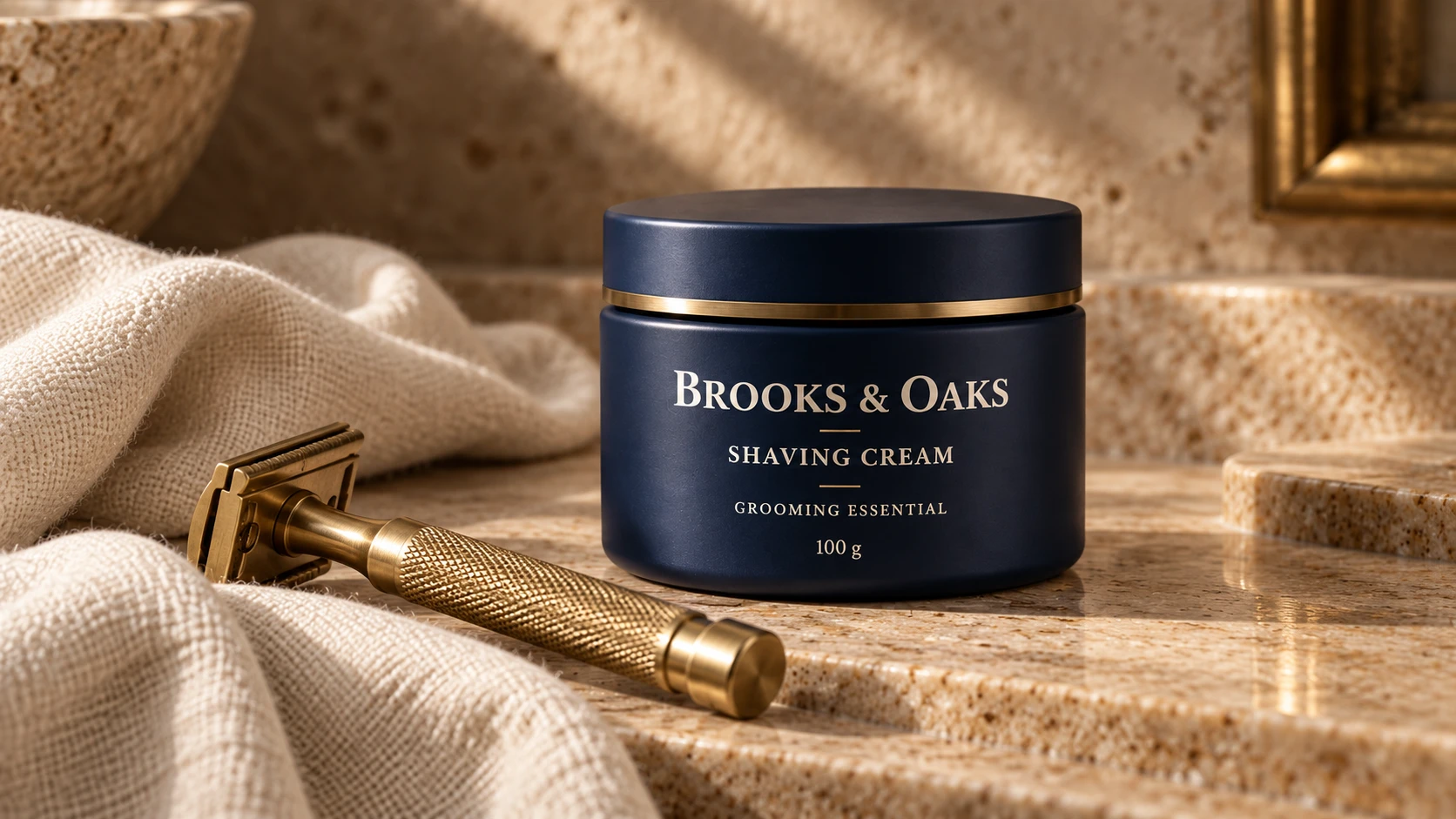
A premium product page has two jobs. It should help you imagine the experience and help you understand the product. Beautiful photography, a considered name and an evocative description can invite interest. Clear quantity, directions, ingredients and purchase information allow that interest to become an informed decision.
The strongest page does not ask one kind of information to replace the other. A fragrance story cannot tell you every ingredient, and a technical list cannot decide whether you will enjoy the scent. This guide offers a way to read both layers together while keeping your own practical needs at the centre.
Identify the exact product
Begin with the full name, category and variant. Similar bottles may contain different fragrances or formulas, and an image can be easy to skim past. Confirm that the title, selected option and quantity match what you intend to buy.
Ask what the product is in plain terms. A body cleanser, body cream, massage oil and hair oil occupy different roles. A poetic name should not leave the category uncertain. If you cannot explain how the product fits into a routine, look for clearer directions before proceeding.
Do not rely entirely on a social post or an older photograph. The current product page and label information should guide the specific purchase. If there is an inconsistency, ask the seller to clarify the exact item that will be supplied.
Separate the story from the specification
The story may describe heritage, atmosphere, fragrance or the pleasure of use. Read it as a way to understand the brand's intended experience. Then look for the practical specification: net quantity, packaging format, directions, full ingredients and any relevant warnings.
A woody fragrance description does not prove the presence of every tree suggested by the imagery. A botanical headline does not explain the complete formula. The story can remain appealing while factual composition comes from the appropriate declaration.
This separation helps you ask better questions. Instead of challenging a mood word to answer a technical concern, request the missing information directly. A clear question gives the retailer a useful opportunity to respond precisely.
Read the full ingredient information
Highlighted ingredients are often selected because they are recognisable or central to the product story. They are not necessarily the complete formula. Look for the full declaration, particularly when you have a known allergy, sensitivity or professional advice about ingredients to avoid.
Do not treat familiar names as automatic guarantees of suitability or unfamiliar names as automatic warnings. The finished formulation and individual context matter. A general description such as natural or premium does not answer every person's needs.
If an ingredient name appears incomplete or ambiguous, ask for the current manufacturer-supplied list. Keep the question tied to the exact variant. Accurate information is more useful than a broad assurance that a product is suitable for everyone.
Understand the intended use
Directions should explain where, when and how the product is used. Is it rinsed away or left on? Is it intended for the body, hair lengths, scalp or another specified area? Does it have first-use or storage guidance you need to consider?
Avoid expanding the use because the ingredient story sounds versatile. A body oil is not automatically a hair oil, and a concentrated aromatic ingredient is not equivalent to a finished cosmetic. The product's intended role should remain clear.
If the directions are missing, ask before purchasing. A useful enquiry might be: “Please confirm whether this is a leave-on body product and provide the current application directions.” That is easier to answer accurately than a request for the most effective way to use an undefined product.
Assess texture and fragrance as preferences
Descriptions of texture and scent can help create a shortlist. Look for concrete information where available: the format, the style of finish and the fragrance impression. Then connect those details to your routine and preferences.
Remember that sensory language is not universal. One person's rich texture may feel too substantial to another. A scent described as calm may not evoke the same association for everyone. Use the description as a guide to exploration rather than a promise about your response.
If the preference is important and uncertain, consider a suitable smaller purchase or ask whether sampling is available. Do not assume a sample or return option exists unless the retailer confirms it in the current offering.
Check quantity and value clearly
Compare the stated net quantity with the current price. Be careful not to confuse a product image's apparent size with the actual amount supplied. If dimensions matter for a shelf or travel kit, look for them or ask.
Avoid assuming a guaranteed number of uses unless there is a clear basis relevant to your application. People dispense differently, and product formats vary. Your own usage pattern will become a more useful guide after appropriate use.
Value includes whether the product will be used and enjoyed. A larger size or bundled set is not necessarily the better choice if it includes variants you do not want. A considered purchase matches quantity to a realistic role in your routine.
Examine images for useful context
Images should help you understand the product's appearance, packaging and details. Look for a clear front view and relevant additional views. Atmospheric photographs can communicate a brand world, but they should not be the only source of practical product information.
Be cautious about inferring exact colour, scale or texture from a screen. Lighting and display settings affect appearance. Use written dimensions and specifications where precision matters, and ask for clarification when a visual detail is essential to your choice.
A product photograph may also include styling objects that are not part of the purchase. Confirm what is included in the listing. This is especially relevant for gifts and sets, where the difference between presentation and supplied contents can affect expectations.
Review the purchase experience
Read the current delivery, cancellation and return information relevant to your location and product. Do not assume that personal-care products have the same return conditions as another category or another retailer. Ask about anything unclear before relying on it.
Check how to contact the seller and what information is useful for an enquiry. A clear support route contributes to confidence, particularly when the product is a gift or an ingredient question matters to the decision.
Avoid treating a premium design as proof that every practical detail will suit your circumstances. The visual experience and the purchase terms should both be clear. A thoughtful brand page makes those details easy to find.
Ask one precise question at a time
If information is missing, write a concise enquiry naming the product and variant, then state the specific question. For example: current ingredient list, intended application area, package dimensions or what is included in a gift set.
Avoid sending a long list of broad questions that depend on individual medical circumstances without providing context. A retailer can explain the product, while a qualified professional can advise on personal health concerns. Matching the question to the right source improves the answer.
Keep the response if it is important to your purchase. Clear written information can help you verify that the item received matches what you understood. The purpose is practical clarity, not creating unnecessary paperwork around an ordinary order.
Read two listings side by side
Imagine comparing two body-care listings that both use the word luxurious. The first has dramatic photography and an evocative ingredient story, but the exact product category and directions are difficult to find. The second offers a quieter presentation with a clear category, full ingredient declaration, quantity and application guidance. The comparison should not be reduced to which page looks more expensive.
Begin by writing the same practical headings for both: product, variant, quantity, intended use, ingredients, texture description and purchase information. Fill each heading only with information actually provided. Leave gaps visible rather than supplying assumptions from another product or a remembered social post.
The first page may still lead to an appealing product, but its missing information needs a question. Ask the seller to clarify the exact category and current directions. The second page may answer the practical questions while leaving a sensory preference uncertain. That uncertainty may call for a suitable smaller purchase or a confirmed sampling option, if available.
Next, connect both products to your routine. A clearly described rich finish may be appealing for evening use but inconvenient before your usual clothing and departure schedule. Another product may be less dramatic in its story yet better suited to the role you need. The brief should remain connected to ordinary use.
Review images for identification rather than treating every styling object as part of the purchase. Check the selected variant and what is included. If a gift box or accessory matters, confirm it explicitly. A photograph can communicate atmosphere without being a complete contents list.
Then read current delivery and return information relevant to the purchase. Do not assume that one seller's terms match another's or that a previous order establishes the current arrangement. The practical experience after checkout is part of the comparison.
Finally, distinguish preference from evidence. You may prefer a botanical story or a particular design language. Those are valid reasons for interest. Claims about treating conditions, independent certification or guaranteed results require an appropriate basis beyond the mood of the page.
The result is a comparison you can explain without dismissing either beauty or information. One page may invite you more strongly, while the other answers your questions more clearly. A considered decision brings those layers together, asks where something is missing and chooses a product whose role is understood before the parcel arrives.
Save the product name and variant with any important written clarification. If the purchase is made later, compare the current listing with the information received and ask again if a material detail has changed. This is particularly useful for a gift, where the person ordering and the person using the product may be different and both benefit from the same clear identification. If an answer remains unclear, keep the question specific when contacting the seller for clarification.
Make the final choice with a simple brief
Before ordering, complete a sentence: “I am choosing this product because its role, texture and practical details fit this part of my routine.” If the sentence depends entirely on the photograph or a vague promise, review the missing information.
A premium purchase can still be emotional. You may love the atmosphere, the typography or the fragrance story. The aim is not to remove that pleasure, but to support it with enough clarity that the product remains satisfying when used at home.
The best product page helps imagination and understanding work together. Read for both, ask where necessary, and choose the bottle whose place in your life is as clear as its place in the photograph.
