
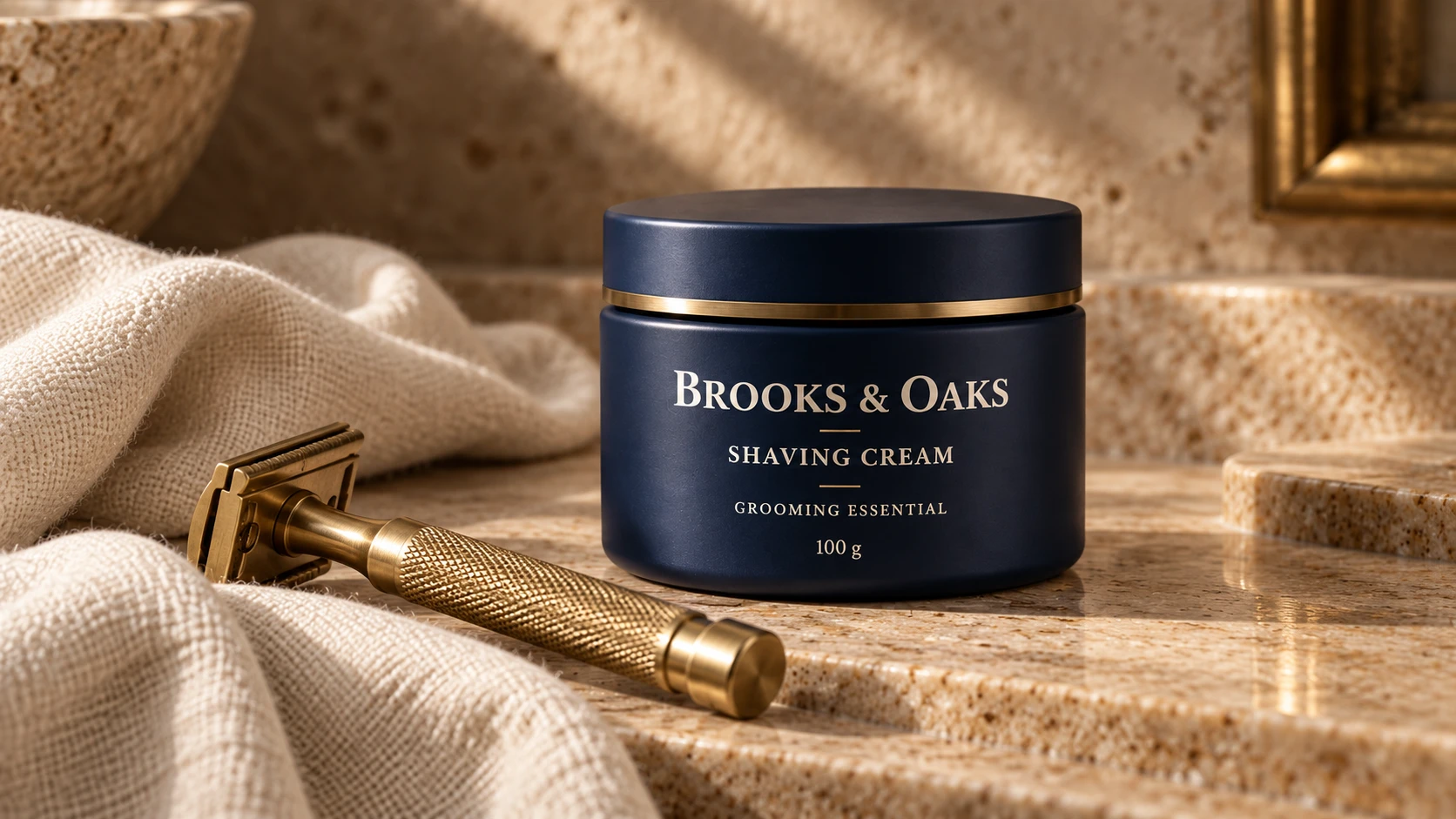
A grooming kit can be a beautifully presented object and still contain several items you never use. The most useful kit begins with the person's routine, not with the number of pieces printed on the box. Its contents should be easy to identify, comfortable to handle and appropriate to the tasks you perform regularly.
Whether you are assembling a kit for home, travel or a thoughtful gift, the same principle applies: each item should have a clear role. This guide offers a way to choose the contents, arrange them and keep the kit useful over time, without turning a modest collection into an equipment catalogue.
Identify the routine before choosing the case
Start by listing the grooming tasks the kit needs to support. Washing, hair arrangement, everyday personal care and occasional maintenance may each involve different products or tools. Your list may be short, and that is not a problem.
Choose the contents before choosing a container large enough to tempt unnecessary additions. A handsome case can encourage you to fill every compartment, but empty space may be more useful than another item with no clear purpose. The case should serve the collection rather than dictate it.
Think about where the kit will be used. A home drawer, a small bathroom and a travel bag create different demands. The best arrangement is the one that fits the actual setting without making familiar actions more difficult.
Distinguish daily and occasional items
Daily essentials deserve the easiest access. Occasional tools can occupy a separate compartment or a suitable secondary location. This distinction prevents the main kit from becoming crowded with items you need only a few times a month.
A useful test is whether you can identify the next item without searching. If the kit must be emptied every time you use it, the organisation is not supporting the routine. Simplify the contents or change the layout before adding more storage accessories.
Occasional items still need a role. Keep them because you use them deliberately, not because they once arrived in a set. A collection becomes more personal when its contents reflect your choices rather than the assumptions of a prepacked assortment.
Choose tools for handling and condition
A tool should feel comfortable in the hand and suitable for its intended task. Consider grip, size, weight and ease of cleaning. An elaborate finish does not compensate for awkward handling, and a compact travel design may not be the most comfortable everyday option.
Follow the maker's instructions and use tools only for their intended purposes. Inspect them periodically for damage, rough edges or loose parts. Do not keep using an unsafe or uncomfortable item merely because it belongs to a matching set.
If you are buying online, check dimensions and materials rather than relying only on photographs. Images can make scale difficult to judge. Practical information helps you understand whether the item will fit your hand, storage space and routine.
Choose products with clear roles
Every product in the kit should have an identifiable purpose and directions. Keep rinse-off and leave-on products distinct, and avoid assuming that a formula can be used in multiple areas simply because its name sounds versatile.
A smaller selection of familiar products can be more useful than a large set of unexplained alternatives. If you are trying something new, review the complete product information and introduce it thoughtfully. Known sensitivities and individual professional advice should guide relevant choices.
Original packaging often provides the simplest way to preserve identity, directions and dates. Decanting everything into identical containers may create a coherent appearance but reduce practical clarity. If travel requires another arrangement, keep labels and suitability in mind.
Let the case make items visible
Choose a case or organiser that allows you to see the contents easily. A deep pouch can be convenient to pack but may turn into a jumble if every item is loose. Compartments are useful when they support the sequence rather than simply increasing the number of places something can disappear.
Consider how the case will be cleaned and dried. Follow its care instructions and avoid storing damp tools or leaking products inside it. A visually attractive material may be less suitable if the kit frequently moves between wet bathroom surfaces and a travel bag.
Leave some unused capacity. A kit packed tightly to the edges is harder to close, inspect and reset. Space is not wasted if it makes the collection easier to use and protects the items from unnecessary pressure.
Keep liquids and tools appropriately separated
Products that could leak should be stored in a way that protects the rest of the kit. Secure closures and consider suitable protective compartments when travelling. Do not place oily containers beside items whose handles need a clean, firm grip.
Electrical tools require separate attention to their safety instructions, including use around water, cooling and storage. A convenient pouch is not automatically suitable for every electrical item. Follow the manufacturer's guidance rather than improvising because the kit looks complete that way.
Separation also helps identification. A product section, a tool section and a small place for frequently used accessories can make the sequence intuitive. The arrangement should reduce the number of decisions needed during ordinary grooming.
Build a travel version selectively
The travel kit should reflect the trip's length, facilities and planned activities. You may need fewer items than at home, or a particular tool because you know the destination will not provide a suitable alternative. Choose deliberately rather than copying the entire bathroom shelf.
Confirm current transport rules with the relevant carrier or official source before packing liquids or restricted items. Do not rely on a remembered limit from a previous journey. Requirements can vary by route and transport type.
After returning, unpack or review the kit. Clean and dry items appropriately, replace what was used and remove anything that no longer belongs. A permanently packed kit can become less reliable if it is never inspected between trips.
Maintain the kit as a small collection
Set a simple review rhythm that fits your use. Check product dates and condition, inspect tools and clean the case according to its care guidance. The task is easier when the contents are modest and clearly organised.
Do not combine product remnants to clear space or refill a labelled bottle with a different formula. Product identity should remain accurate. If a container or product has changed unexpectedly, seek appropriate guidance rather than disguising the issue through mixing.
A maintained kit feels dependable. You know the tool will be where you expect it and the product will be clearly identified. This practical confidence is one of the qualities that makes a small collection feel premium.
Assemble a gift around the recipient
A grooming kit given as a gift should reflect the recipient's habits and preferences. Ask about fragrance, product categories and practical needs where possible. Avoid choosing a large set simply because it looks more generous.
Be careful with assumptions about gender, age or appearance. A gift can support a routine the person enjoys without implying that they need correction. A note about the pleasure or convenience you hoped to offer can make the gesture more personal.
If preferences are uncertain, choose a flexible format or a smaller selection with clear product information. Review current retailer policies before promising exchange options. Thoughtfulness includes the practical experience after the box is opened.
Assemble a kit from an existing drawer
Imagine a person considering a new twelve-piece grooming set because their current drawer feels disorganised. Before ordering, they list the tasks they actually perform and remove the existing items for inspection. The exercise reveals that they already own several suitable tools, but the useful ones are mixed with duplicates and items that no longer serve a purpose.
They identify a small daily group: the familiar hair tool, a few appropriate accessories and the products used in the established routine. Occasional items remain available in a separate suitable location. Anything damaged is taken out of active use and handled according to the appropriate repair or replacement decision.
The container is chosen afterward. A shallow organiser works better at home than the deep travel pouch they had been using as a permanent drawer insert. The travel pouch remains useful for journeys, but it no longer dictates the arrangement of the everyday kit. Each storage format now answers a different setting.
Next, the person checks care requirements. Tools are cleaned and dried according to their instructions, product labels remain visible and electrical items have a separate suitable place. This step matters because organisation alone does not improve an item that is unsuitable or poorly maintained.
A week of ordinary use provides the next lesson. If the daily item is always returned to the counter rather than its compartment, the assigned place may be inconvenient. If a supposedly occasional tool is used most days, it may belong in the active group. The system is adjusted according to actual behaviour.
Only after this review does the person identify a genuine purchase need. Perhaps one comfortable replacement tool would solve a specific handling problem. That is a clearer brief than buying an entire set to make the drawer appear complete. The purchase becomes smaller and more purposeful.
For a gift, the same logic can be applied through conversation rather than inspection of someone else's possessions. Ask which tasks or practical needs matter to the recipient. Choose a coherent small set and let the case support those contents. Avoid assuming that the largest number of pieces creates the most generous experience.
A grooming kit earns its place through readiness. The right item is available, its role is clear and its condition supports comfortable use. A well-chosen container can help, but the quality of the kit begins with the decisions about what belongs inside it.
When choosing a replacement, bring the practical brief back to the foreground. The useful comparison concerns handling, intended task and care requirements. A matching finish may be pleasing, but it should support a tool you will comfortably use rather than become its only reason for inclusion.
Let usefulness define completeness
A complete kit is one that supports its intended routine. It does not need every category of grooming tool or a separate product for every possible occasion. Its contents should be explainable, maintained and easy to return to their places.
Before adding an item, ask which task it serves, how often it will be used and whether it duplicates something already present. If the answers are clear, the addition may be worthwhile. If they are vague, leave the space open.
The most satisfying grooming kit often becomes quieter over time. Unused items leave, dependable ones remain, and the arrangement begins to feel natural. That is the point at which the kit becomes personal: it reflects how you actually care for yourself.
