
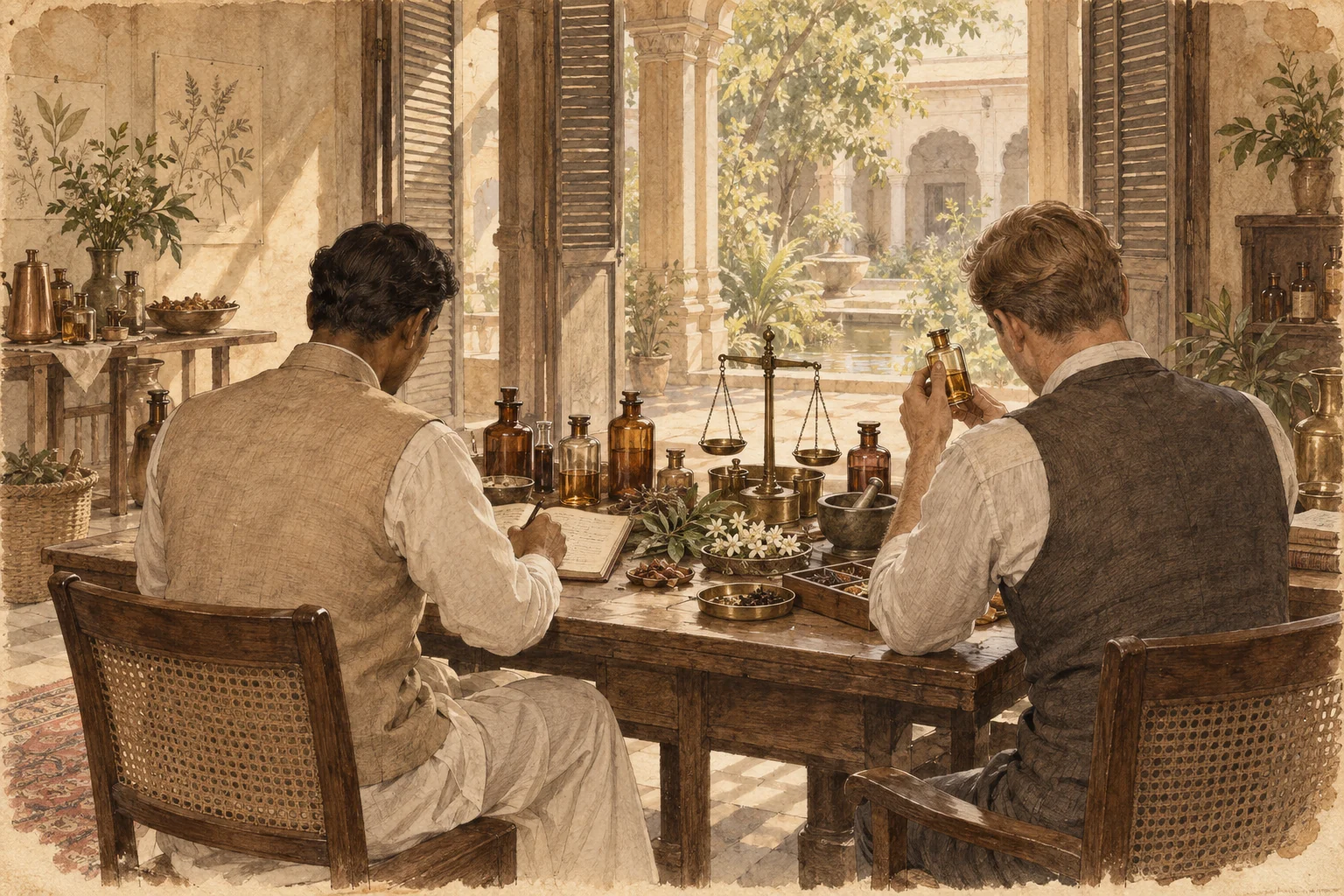
A good journal gives a brand room to speak more slowly than a product card allows. There is space to explain a texture, consider the role of fragrance, explore a familiar grooming habit and ask what makes an ordinary routine feel personal. The conversation can move beyond the moment of purchase into the way a product is understood and used.
The Brooks & Oaks Journal is conceived as that kind of reading room. It brings together practical guides, sensory exploration and reflections on the details of everyday care. The aim is to make the experience more considered: clear enough to be useful, generous enough to invite reading and grounded enough to remain connected to real life.
A journal with a practical centre
Personal-care writing can become crowded with instructions and promises. A product is described as essential, a routine becomes a long list, and a familiar daily action begins to sound like an expert task. We prefer to begin with the ordinary question: what is this for, and how does it fit the person's day?
That practical centre shapes the journal's approach. Articles consider timing, texture, application context, clothing, storage and the room around a routine. These details may seem modest, yet they often determine whether a product becomes a pleasure or another object on a crowded shelf.
The writing is intended to help you ask clearer questions and recognise your own preferences. It does not require you to adopt every idea. A useful article may lead to a purchase, a simpler routine or the decision that what you already use works well.
Care as an everyday practice
Everyday care happens in real rooms and schedules. The bathroom may be shared, the morning may begin quickly and the evening may arrive with little spare energy. A ritual that depends on perfect conditions is unlikely to become a dependable part of life.
The journal therefore gives attention to short, familiar sequences as well as occasional longer ones. A prepared towel, a clear surface and a product used with understanding can create a considered moment without elaborate preparation. Simplicity can be a result of attention rather than a lack of it.
We are interested in the way routines become personal through repetition and small edits. You discover the amount you prefer, the fragrance you enjoy and the order that makes dressing easier. Those observations give a product its place in your life.
A clear distinction between story and information
A brand story can create atmosphere. It may draw on memory, design, landscape or the character of a fragrance. Product information answers a different set of questions: what the item is, what it contains and how it is intended to be used.
The two should support one another without becoming confused. A woody fragrance description is not a complete ingredient list. A heritage-inspired design is not proof of a particular historical certification. A sensory association is not a medical claim.
Throughout the journal, the aim is to keep these distinctions visible. You can enjoy the atmosphere while still asking for precise facts. A considered customer experience gives both imagination and understanding an appropriate place.
Body care beyond the crowded shelf
The body-care collection explores ordinary decisions: choosing a cleanser, comparing an oil and a cream, making the after-shower minutes more comfortable and adapting a routine to changing circumstances. The emphasis is on the finished product and its intended use.
A celebrated ingredient can invite curiosity, but it does not explain an entire formula. A beautiful bottle can create interest, but it still needs to dispense conveniently and fit the room. The journal looks at these relationships rather than ranking products only through one highlighted feature.
The goal is a collection whose roles are clear. You know what you use daily, what you enjoy occasionally and what does not need to be added. Personal care becomes easier when every product does not have to answer every possible need.
Hair care with clearer questions
Hair-care articles separate different contexts: scalp and lengths, pre-wash and leave-on use, product choice and the organisation of wash day. These distinctions help turn broad concerns into questions that can be answered more usefully.
The journal does not treat a cosmetic oil as a universal response to hair growth concerns or persistent scalp symptoms. Those questions may require individual professional assessment. A retailer's role in clarifying ingredients and directions remains different from clinical advice.
Within everyday grooming, there is much to explore without overstating a product's role. Handling, timing, tools and the final cosmetic finish all influence the experience. Understanding those details can make a routine more comfortable and easier to repeat.
Fragrance as a personal language
Fragrance writing offers a vocabulary, not a test. One person may associate a woody impression with a clean drawer, another with a shaded path. The difference is part of the interest. Your own references can be more useful than repeating a list of unfamiliar notes.
The fragrance collection explores mood, memory, layering and the context of shared spaces. It considers not only what a scent suggests, but where and how you want to experience it. A personal fragrance should fit both preference and setting.
Fragrance-free care remains a complete preference. The journal's idea of a considered ritual does not depend on scent. Texture, order, useful design and time can provide their own forms of pleasure.
Living around the ritual
A product is used within an environment. Towels need a place to dry, bottles need suitable storage and tools need to be ready when you reach for them. The room can support the routine or make it unnecessarily difficult.
The living articles consider this surrounding experience: a practical guest bathroom, a travel collection, a Sunday routine and a shelf arranged with restraint. The purpose is not to prescribe a particular home style. It is to make familiar spaces easier to use and more pleasant to return to.
Design enters through proportion, contrast and clarity. A little space around a bottle can be more useful than another decorative object. The most lasting arrangement is the one that survives ordinary use because each item has a practical place.
Gifting as an act of attention
A personal-care gift should begin with the recipient. Their preferences, routines and circumstances matter more than the number of products in the box. The gifting collection explores how to choose a clear role, build a coherent set and write a note that explains the thought behind it.
The journal treats presentation as support for the gesture rather than a substitute for it. A suitable product and one specific personal sentence can feel more meaningful than an elaborate assortment chosen without knowledge of the person.
There is also room for the recipient's own experience. A gift offers a possibility; it should not demand a particular response or routine. Thoughtfulness includes the freedom to make the object one's own.
House stories and actual news
The Journal and House News share a home but serve different purposes. Evergreen articles provide ideas you can return to, while news is the place for actual announcements, updates and occasions from the House. Clear labels help readers understand which kind of piece they are opening.
Dates and authorship provide useful context, and the reading layout is designed to make longer articles easier to navigate. A contents list can help you find a relevant section, while related stories offer a natural next step when you want to continue.
The collection is intended to grow through considered additions rather than through the pressure to turn every small event into an announcement. A worthwhile story should have a reason to be told and enough substance to reward the time spent reading it.
Three ways to use the reading room
Imagine arriving at the journal with a practical question about a product category. You are comparing a body oil and a cream and want to understand how their textures might fit your day. The relevant article can help you organise the decision around intended use, application, clothing and the finish you prefer. The product's own current information then answers the specific formula questions.
A second visit may begin with curiosity rather than a purchase. You enjoy woody fragrances but find the vocabulary difficult to describe. A sensory article can offer ordinary comparisons and help you develop your own words. You may leave with a clearer preference and no immediate shopping decision. That is still a useful result of the reading.
A third visit may concern an occasion. You want to give a personal-care gift and are unsure how to make it feel thoughtful. The gifting articles can help separate the recipient's preferences, the product's role and the message you want to write. The practical details of the actual order remain something to confirm with the current listing and retailer information.
These routes illustrate why the journal is organised as a collection rather than a single long manual. Different readers arrive with different purposes, and the same reader may return with a new question later. Categories, search and contents links are intended to make that movement easier.
You can also read beyond the immediate question. An article about the after-shower routine may lead to one about the bathroom shelf, because product use and the surrounding room are connected. A fragrance article may lead to a discussion of shared spaces, because personal preference has a social context.
The connections should remain useful rather than compulsory. There is no reading sequence to complete before choosing a product, and no requirement to adopt every ritual described. The articles offer frameworks and examples that you can compare with your own circumstances.
Where a piece includes an illustrative scenario, it is intended to make a decision easier to understand. It is not presented as a customer testimonial or proof of a product's result. Clear examples can be helpful without borrowing the authority of a real experience that has not been documented.
The reading room is successful when you leave with a more precise question, a practical adjustment or a clearer sense of what you enjoy. That kind of understanding can make the entire House experience more considered, from browsing a page to placing a familiar bottle on your own shelf.
Read in the way that suits you
You can read an article from beginning to end, use the contents list to find a question or return later to a practical section. The journal is not a course you need to complete. Its value lies in being useful when a particular decision or curiosity arises.
Take what fits your circumstances and leave room for individual advice where needed. Product labels and current information remain the reference for a specific formula. Personal medical concerns deserve the appropriate professional conversation.
Welcome to a reading room built around ordinary care and considered detail. The invitation is simple: explore, ask clearer questions and notice the small choices that make a familiar routine feel more fully your own.
