
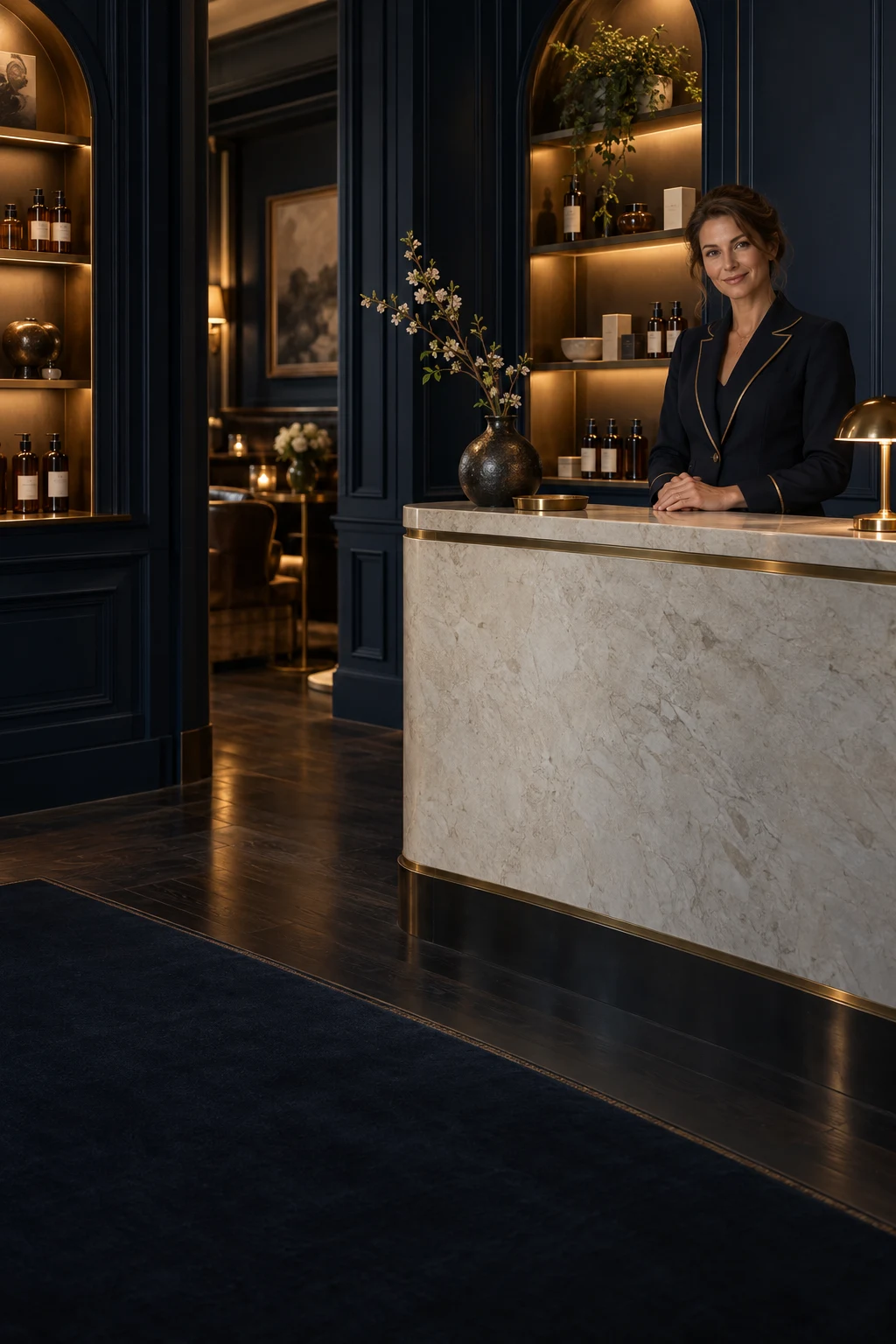
A guest bathroom communicates care before anyone comments on its design. There is a clean towel within reach, enough space to put down a personal item and no uncertainty about which product is intended for use. These details are modest, but they shape whether a visitor feels comfortable asking for what they need.
Good hospitality does not require reproducing a luxury hotel exactly. It requires noticing the guest's practical experience. A room can be beautifully decorated and still leave someone searching for a towel hook or wondering whether a product is decorative. This guide begins with clarity and builds atmosphere around it.
Walk through the room as a guest
Stand at the doorway and imagine arriving without knowing the household routine. Where would you place a wash bag? Which towel is intended for you? Can you identify the products and find a useful light? This simple walkthrough reveals gaps that familiarity can hide from the host.
Use the room's ordinary lighting rather than evaluating it only in daylight or from a photograph. A guest may arrive late or use the space early in the morning. Practical visibility should remain clear at those times.
Notice whether any action requires moving the host's possessions. A surface filled with personal products may leave no room for the visitor's own items. A little available space can feel more welcoming than another decorative addition.
Provide a clear working surface
Choose one suitable area where the guest can set down a personal item. Keep it clean, stable and away from direct water spray where possible. It does not need to be large; it needs to be recognisable and usable.
Avoid filling the area with a complete product display. A few essentials can be offered separately, leaving the guest room to organise their own routine. Hospitality includes allowing someone to use familiar products without feeling that they are disrupting the room.
If storage is limited, explain the available space simply. A small tray or shelf can create a clear boundary. The object should support use, not become another item the guest must move before reaching the basin.
Make towels easy to identify
Provide suitable clean towels and a practical place to hang them. Let the guest know which are intended for use, especially if the room also contains decorative textiles. No one should have to guess whether a carefully folded towel is an invitation or part of a display.
Consider drying conditions and the length of the stay. A thick towel may feel appealing but be less practical in a room where it remains damp. Choose textiles whose care and drying needs fit the setting, and make replacements available as appropriate.
A simple hook or clear rail can be more useful than an additional folded stack. The guest needs somewhere to put the towel after use. Completing that small sequence is part of making the room comfortable.
Offer products with clear identities
If providing personal-care products, keep the category, directions and ingredient information accessible. Original packaging can be useful because it preserves those details. Several identical unlabelled bottles may create a neat appearance but leave the guest unsure what they contain.
Choose products for ordinary appropriate use and avoid assuming that one distinctive fragrance or formula suits everyone. Guests may bring their own preferences, sensitivities or professional advice. Make it comfortable for them to use their own products.
If you offer a small selection, explain it without turning the visit into a product demonstration. A brief note or clear arrangement is enough. The purpose is to remove uncertainty, not to require the guest to participate in a particular brand ritual.
Keep fragrance optional
A strongly scented room can be difficult for someone who prefers or needs fragrance-free conditions. Consider whether room fragrance is necessary at all. Cleanliness, ventilation appropriate to the room and ready textiles can create a welcoming atmosphere without an intense scent.
If fragranced products are offered, let them remain choices. Avoid layering several aromatic elements simply because each is pleasant to you. The combined presence may be more prominent than expected.
Ask about preferences when appropriate, especially for a longer stay or a guest you know well. A small adjustment made in advance can be more thoughtful than expecting someone to raise a concern after arrival. Hospitality begins with the person, not with a fixed idea of the room's atmosphere.
Make everyday actions accessible
Look at reach, grip and visibility. A beautiful bottle on a high shelf may be difficult to use. A tightly packed tray may make it awkward to lift one item without knocking another. Choose positions that support comfortable ordinary movement.
Keep the floor clear and manage anything that could become slippery. If oils or richer products are available, provide them in a setting where spills can be noticed and cleaned. The room should remain safe for someone unfamiliar with its layout.
Avoid assuming that a guest will ask about every inconvenience. Many people hesitate to interrupt a host over small needs. Clear placement and simple information reduce the number of questions they need to ask.
Separate practical light from decorative atmosphere
Useful lighting helps a guest read labels, groom and navigate the room. A softer atmosphere can be attractive, but it should not obscure ordinary tasks. Check that switches are easy to find and that the room makes sense after dark.
If electrical grooming tools are supplied, follow their safety requirements and provide an appropriate place for use and storage. Do not leave equipment in a wet area or rely on an improvised arrangement to preserve a decorative composition.
The most welcoming design is one that works without explanation. A guest should not need to learn a complicated lighting sequence or move several objects to complete a familiar routine. Ease is part of the atmosphere.
Add one personal detail
A small note, a fresh textile or an object that belongs naturally to the home can make the space feel personal. Choose one detail that communicates welcome without filling the room. The effect is often stronger when the practical needs are already met.
A note can be brief: where spare towels are kept, which shelf is available or an invitation to ask if something is missing. Useful information can feel warm when written plainly. It does not need formal hotel language to be thoughtful.
Avoid turning the guest space into a display of everything you consider luxurious. A visitor's comfort may come from the freedom to use the room naturally. A little restraint leaves room for their own habits.
Maintain the welcome during the stay
For longer visits, check discreetly whether towels or essentials need attention. Do not assume that the initial setup remains sufficient throughout the stay. A simple question can prevent the guest from feeling awkward about asking for a replacement.
Keep shared areas orderly and clarify any household arrangements that affect use. If the bathroom is used by several people, make ownership and storage clear. The guest should not have to infer which products or textiles belong to someone else.
Respect privacy while providing help. Thoughtful hosting offers support without repeatedly entering or rearranging the guest's personal space. The balance is to make assistance easy to request and ordinary use easy to manage independently.
Prepare the room for an overnight visitor
Imagine a guest arriving in the evening for a short stay. The host begins by clearing a suitable area where the visitor can place a wash bag and personal items. This space is intentionally left available rather than filled with a complete display of products. The room communicates that the guest's own routine is welcome.
A clean towel is placed clearly, with a practical hook or rail available afterward. The host avoids using the only suitable drying place for decorative textiles. A small note identifies where a spare towel can be found, removing the need for the guest to ask about an ordinary requirement.
The offered products are clearly labelled and appropriate for their intended use. Original packaging keeps directions and ingredient information accessible. The host does not assume that a set of identical decanters is more hospitable simply because it creates visual uniformity. Readability and identification are part of the welcome.
Room fragrance is kept optional or omitted, especially when preferences are unknown. The host checks that the space feels clean and comfortable without relying on a strong scent to create an impression. The visitor has room to use their own products rather than being expected to adopt the host's fragrance choices.
Lighting is checked after dark. The switch is easy to find, the basin area is useful for grooming and the floor remains clear. If any electrical tool is supplied, its use and storage conditions follow the manufacturer's guidance. The guest should not need to understand an improvised arrangement to use the room safely.
The host then walks through the sequence as someone unfamiliar with the house: enter, place belongings, identify the towel, read a product, wash, dry and put items away. Each point of hesitation suggests a small improvement. This walkthrough often reveals more than adding another decorative accessory.
During the stay, a brief and respectful check about essentials is enough. The host does not repeatedly enter or rearrange the guest's space. Assistance is available, while ordinary use remains independent. The balance allows care without making the visitor feel observed.
After departure, the host notes what would improve the next visit. Perhaps the clear shelf mattered more than the decorative tray, or the towel hook needed a better position. The room is refined through actual use. A considered guest bathroom is not defined by how much it contains, but by how little uncertainty it leaves for the person who has been welcomed into it.
If the guest room is used infrequently, review products and tools before each visit rather than assuming the previous arrangement remains suitable. Check the labels, condition and practical setup, then replace or remove items as appropriate. A welcome prepared for the actual visit is more useful than a permanently staged display that has not been inspected for some time.
Review the room after departure
Notice what worked and what created uncertainty. Perhaps the towel rail was more useful than the decorative tray, or the guest needed a clearer place for a wash bag. These observations can improve the next welcome without requiring a renovation.
Clean and reset the room appropriately, inspect products and keep their information intact. Do not combine remnants from different bottles to restore the appearance of a full set. Product identity and suitable condition matter more than a perfectly matching display.
A considered guest bathroom expresses hospitality through practical details. The clear surface, readable label and ready towel tell the visitor that their comfort has been imagined. That is a quiet form of luxury with a lasting effect.
